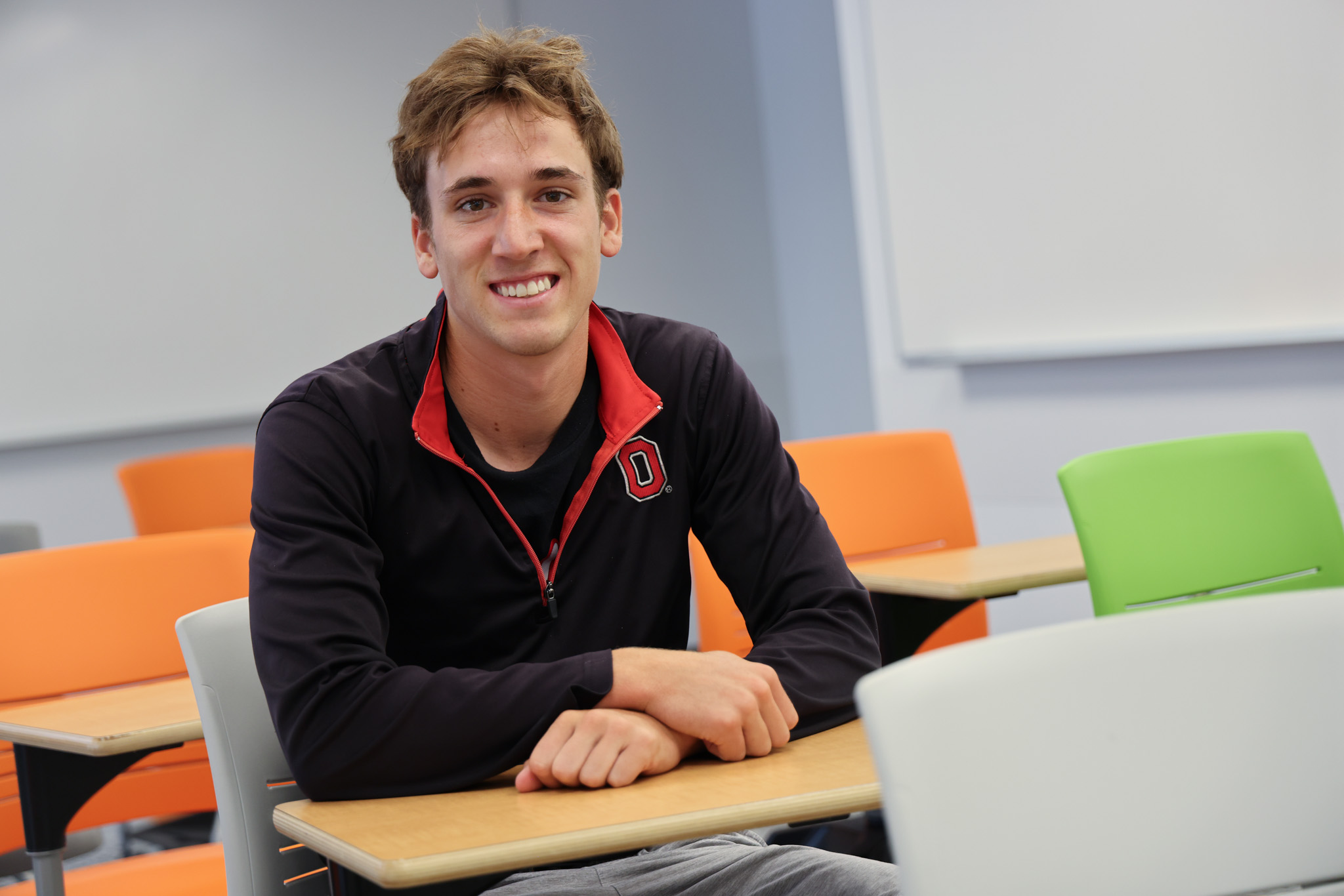
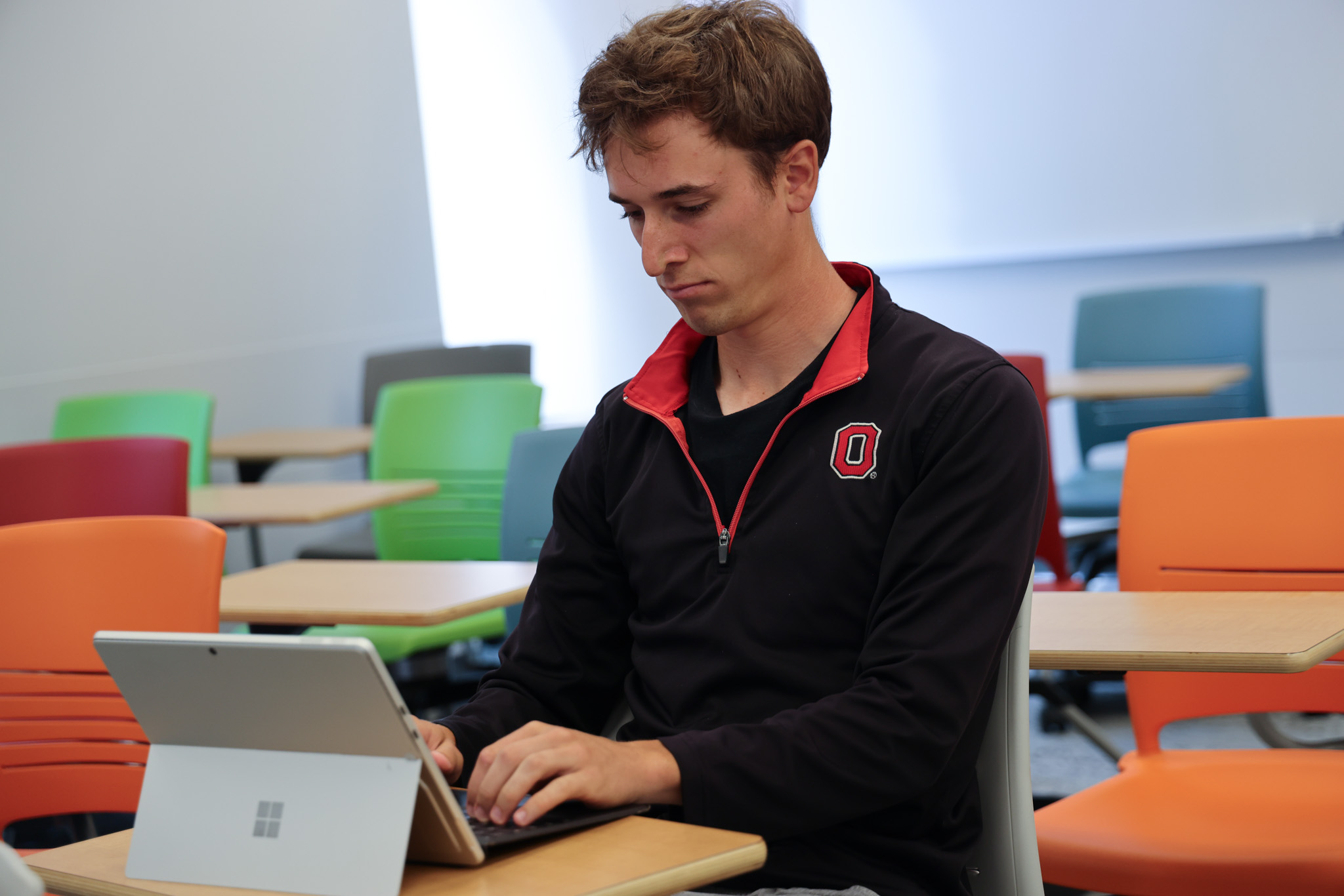
Before astronomers can unlock new discoveries about the center of the Milky Way, they first need to know which stars to study. That's where Adam Ballas comes in.
A senior majoring in Physics and Astrophysics, Ballas is conducting research through Ohio State's Undergraduate Research Apprenticeship Program (URAP) under the mentorship of Dr. Marc Pinsonneault. His project focuses on identifying red giant stars that can be used to better understand the properties and evolution of stars at the heart of our galaxy.
“My research project involved building a list of stars that can be viewed by the new ROMAN telescope and used for asteroseismology,” Ballas said.
The Roman Space Telescope will allow scientists to observe the densely populated center of the Milky Way. To determine important characteristics such as a star's mass and temperature, astronomers can study vibrations in a star's outer layers, a process known as asteroseismology. Ballas' work centers on identifying red giant stars that are suitable for this type of analysis.
By creating a catalog of these stars ahead of the telescope's launch, he is helping researchers identify promising targets for future observations and gain new insights into the structure of our galaxy.
One of the aspects of research Ballas finds most rewarding is the opportunity to work with data collected by observatories around the world.
“I used data from the Hubble Space Telescope, as well as telescopes in Arizona and Chile,” he said. “The amount of time and effort that has gone into getting this data is amazing.”
The project has also given him the chance to collaborate with experts in the field and deepen his understanding of how scientific discoveries are made.
“I also love how I get to meet with some of the top experts in the world and talk about the science I love,” Ballas said. “It is very satisfying to solve a problem that two months ago I didn't even understand.”
Through his experiences in URAP, Ballas has learned that research often requires persistence and self-motivation as much as technical knowledge.
“Research is so different from other jobs because there is no set task,” he said. “The important skill you need to succeed in research is motivation, not intelligence.”
As he prepares for graduate school, Ballas hopes to continue developing the independence and problem-solving skills that research demands.
“Any information you need is available from advisors, papers or the internet,” he said. “The key is being motivated enough to seek out that information and try to find solutions to the problem.”
Through his work, Ballas is helping prepare astronomers for future observations of the Milky Way, demonstrating how undergraduate researchers can contribute to projects that advance our understanding of the universe.