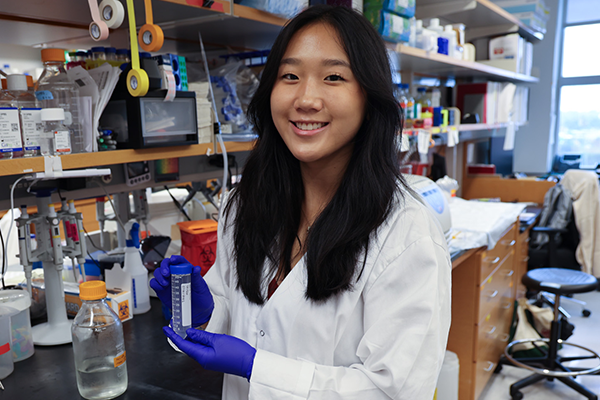
For Gabby Wang, research provides the opportunity to explore new ideas, ask meaningful questions, and contribute to a growing understanding of human health.
A biology student participating in Ohio State’s Undergraduate Research Apprenticeship Program (URAP), Wang works in the laboratory of Dr. Jerry Lio in the Department of Microbial Infection and Immunity, where she contributes to several immunology-focused research projects ranging from infectious disease to cancer biology.
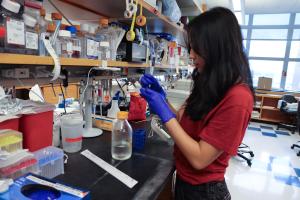
One of her current projects examines how immune cell populations are affected when infected with influenza in the presence and absence of vitamin C. Another one of her projects works with other researchers to measure vitamin C levels in human blood samples using a specialized cytometry method called SALSA. Looking ahead, Wang plans to explore whether restoring a gene called TET can help recover normal cellular function in models linked to myeloid leukemia.
While the projects vary in focus, they all center on understanding the biological processes that influence health and disease.
“Research consists of so many specializations and endless research questions,” Wang said. “With these countless possibilities, you can tailor the perfect research project to your interests and continue working on it as you make more novel discoveries.”
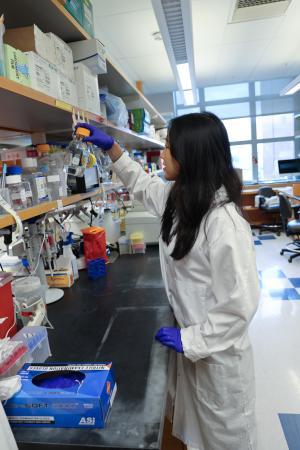
Through her work in the lab, Wang discovered that research offered a different way to make an impact on human health.
“I always knew I wanted to go into a career involved in health, and I used to think it would be clinical healthcare,” she said. “Joining a lab specializing in immunology has allowed me to feel still connected to healthcare but with more freedom, because I can plan my own experiments, make my own projects, and each day is something different.”
Beyond technical skills, Wang says research has shown her how every discovery can spark new questions and opportunities for learning.
As she continues her research journey, she hopes to become more independent in the laboratory and strengthen her ability to solve problems on her own.
“I hope to learn how to work more independently,” Wang said. “My goal is to be able to depend on myself if an experiment doesn’t go as planned so I can think on my feet and solve the issue myself.”
Through URAP, Wang is gaining hands-on experience that is helping her grow as both a scientist and a future leader in health research. She hopes to continue that journey by entering a PhD program after graduation.